How an anion gap calculator calculates
An anion gap calculator is a medical resource that calculates the difference between measured electrolytes in the blood, most commonly sodium, chloride, and bicarbonate. This result helps clinicians determine whether there are undetected ions present in excess, which can signal an underlying acid-base imbalance. The anion gap is not a direct laboratory measurement; it is a derived value derived from a standard electrolyte panel or broader serum chemistry panel.
Because the calculation is based on the relationship of positively charged and negatively charged particles, it offers insight into acid-base balance and can reveal an anion deficit or surplus. In practice, the anion gap is often used as a diagnostic aid when evaluating metabolic acidosis, especially when the cause is not readily obvious. It is especially helpful when a clinician wants to distinguish between different forms of metabolic derangement.
Many calculators also allow the inclusion of potassium, although some formulas exclude it. The reason is simple: potassium contributes to the ionic balance, but its concentration is fairly low compared with sodium. Even so, different institutions use slightly different formulas, so the calculation should always be interpreted in the context of the local laboratory method and reference interval.
In short, the anion gap calculator assists identify whether the blood contains extra unmeasured acids, such as lactate or other organic acids, and whether the result supports a diagnosis of high anion gap metabolic acidosis.
How lactic acidosis changes the anion gap
Excess lactate is a type of acid-base imbalance caused by excess accumulation of lactate, a natural waste product of anaerobic metabolism. If oxygen delivery or utilization is impaired, tissues rely more on anaerobic pathways, and lactate production increases. This can reflect a problem with tissue oxygenation, blood flow, or both.
When lactate rises, acid accumulates and consumes buffering capacity, which moves the body toward acidosis. Because lactate is an anion not directly measured, it increases the anion gap. For this reason lactic acidosis classically presents as a high anion gap metabolic acidosis. The calculator does not measure lactate directly, but it can reveal the presence of acid accumulation that is compatible with elevated lactate.
This connection is important because a patient can have a significant rise in blood lactate before the full clinical picture is obvious. The anion gap provides a useful clue during early laboratory assessment, especially when paired with symptoms, vital signs, and an arterial blood gas. It helps bridge the gap between chemistry results and physiologic interpretation.
Still, lactic acidosis is not the only cause of an elevated anion gap. The result should be treated as a signpost, not a diagnosis by itself. The true value of the anion gap calculator is in helping the clinician connect the dots between acid-base abnormalities, oxygen delivery, and the underlying disease process.
How to calculate the anion gap
The traditional anion gap formula is:
Anion gap = sodium − (chloride + bicarbonate)
Some formulas add potassium:
Anion gap = sodium + potassium − (chloride + bicarbonate)
Most adults are assessed with the simplified formula without potassium, because potassium has a small effect on the final number. However, the approach used should be consistent with the laboratory and the calculator being applied. The formula is straightforward, but accurate interpretation depends on the quality of the input values and the clinical context.
Below is the basic process:
- Obtain the most recent electrolyte panel. Identify the measured sodium, chloride, and bicarbonate values. Use the anion gap formula to compute the result. Review the result with the appropriate reference interval. Consider whether albumin or other factors may alter interpretation.
As an example, if sodium is 140, chloride is 100, and bicarbonate is 22, the anion gap is 18. If potassium is included, the number may be slightly higher. That difference is why formula selection matters when comparing values across different settings.
The calculation becomes more nuanced in patients with abnormal albumin or mixed disorders. In such cases, the raw number alone may underestimate the severity of the acid-base problem. A clinician must evaluate the calculated value alongside the entire acid-base picture, including the possibility of an anion gap correction.
Expected anion gap reference range and analysis
The expected reference range for the anion gap differs by laboratory approach, analyzer, and whether potassium is included. This means there is no single universal cutoff. In general, the normal anion gap is the laboratory’s expected interval for a healthy population, while a high anion gap suggests excess unmeasured anions.
Assessment begins with the lab’s own laboratory values. If the result falls above that range, the clinician reviews causes of increased acid production, impaired acid clearance, or toxin exposure. A borderline value may still matter if the patient has symptoms or if other tests point toward acidosis. Conversely, a value that appears normal may be misleading if albumin is low.
Understanding whether the patient has a normal or high anion gap is only part of the evaluation. The result should be integrated with pH, bicarbonate, and the presence of symptoms such as tachypnea, altered mental status, or hypotension. A normal anion gap does not completely exclude a serious acid-base issue, and a high value does not identify the exact cause.
In practice, the clinical interpretation of the result depends on the overall context: the trend over time, the patient’s condition, and whether there is evidence of another metabolic derangement. The calculator is most helpful when used as part of a broader diagnostic process rather than as a stand-alone answer.
Typical causes of elevated anion gap in lactic acidosis
If the anion gap is elevated in the setting of lactic acidosis, the clinician looks for conditions that promote lactate production or reduce clearance. Typical causes include sepsis, shock, hypoxia, and tissue hypoperfusion. These states reduce oxygen delivery or utilization and push tissues toward anaerobic metabolism.
In sepsis, inflammatory mediators, microcirculatory dysfunction, and impaired oxygen use can raise the lactate level even before blood pressure falls dramatically. In shock, reduced circulating volume or pump failure lowers tissue perfusion, which can produce a significant acid burden. Hypoxia from respiratory or circulatory causes can also contribute by limiting tissue oxygenation. Tissue hypoperfusion is especially important because it directly links hemodynamic instability to lactate generation.
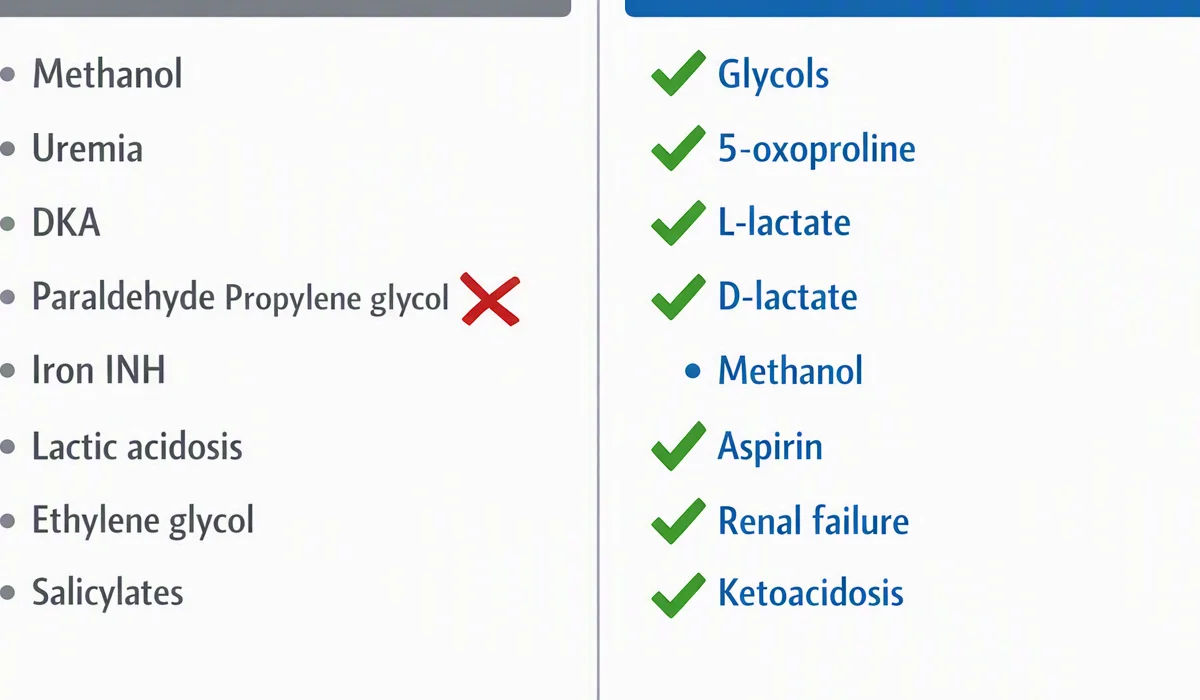
Other contributors to elevated anion gap with metabolic acidosis include renal failure and toxic ingestion. Renal failure reduces acid excretion and may intensify the acid-base disturbance. Toxic ingestion can introduce acids or acid precursors that increase the gap independently of lactate, such as salicylates, methanol, or ethylene glycol. These causes may coexist with lactic acidosis, creating a more complex clinical picture.
The key point is that a high anion gap does not identify a single diagnosis. It indicates the presence of unmeasured anions, and lactic acidosis is one of the most urgent and common explanations in critically ill patients.
Adjusting the anion gap for low albumin
Albumin is a key unmeasured anion, so shifts in albumin concentration can significantly affect the anion gap. When albumin is low, the measured gap may appear misleadingly normal even when there is significant acid accumulation. This is why hypoalbuminemia is a major pitfall in acid-base interpretation.
An albumin correction adjusts the calculated value upward when albumin is reduced. This helps reveal occult acid-base abnormalities that would otherwise be missed. In many clinical settings, especially in critical illness, albumin is often low because of inflammation, dilution, malnutrition, or ongoing losses. Because albumin contributes to the body’s protein binding and buffering behavior, its absence can mask a meaningful elevation in unmeasured acids.
Adjusting for albumin improves the precision of the anion gap as a marker of acid accumulation. Without correction, a patient with lactic acidosis and hypoalbuminemia may show a seemingly modest or even normal gap despite significant disease. That can delay identification of the underlying problem.
As a practical matter, albumin correction should be considered when the result does not match the clinical picture. If the patient looks acidotic but the gap is not elevated, check albumin before dismissing the abnormality. The corrected value often provides a better representation of the patient’s true acid-base status.
Applying the result with blood gas and lactate testing
The Anion Gap Calculator result is most helpful when interpreted along with an arterial blood gas, serum lactate, and related measurements such as pH and base deficit. These tests support each other and help determine whether the patient has clinically significant acidosis, how severe it is, and whether the source is likely lactate-driven.
The arterial blood gas shows the respiratory and metabolic components of acid-base balance. A low pH supports acidemia, while bicarbonate reduction suggests a metabolic process. The base deficit can help measure the degree of metabolic acid burden and often becomes more negative as acidosis worsens. Meanwhile, serum lactate provides direct evidence of elevated lactate production or reduced clearance.
When the Anion Gap Calculator result is elevated and lactate is high, lactic acidosis becomes a strong possibility. If the pH is low and the base deficit is significant, the physiologic impact is clearer still. If the lactate is elevated but the pH is near normal, compensation may be present, or there may be a mixed disorder. This is why the test combination matters so much for accurate assessment.
An elevated anion gap is a clue; lactate, pH, and base deficit help explain the full acid-base picture.
In clinical practice, these results should be viewed as a package. The calculator provides a calculated value, but the supporting tests define the severity, timing, and likely cause of the disorder.
When a raised anion gap calls for immediate evaluation
An increased anion gap may represent a metabolic emergency when it occurs along with signs of organ dysfunction, shock, respiratory distress, or altered mentation. In these circumstances, the priority is not simply to repeat the test; it is to find the cause and stabilize the patient https://anion-gap-calculation.com/reference/units.html quickly. This is particularly true in critical care settings.
Prompt evaluation is warranted when the patient has severe lactic acidosis with persistent hypotension, worsening renal function, rising lactate, or evidence of poor perfusion. It is also urgent when the result points to toxic ingestion, because prompt treatment can prevent further injury. Clinical deterioration, severe acidemia, or a rapidly increasing anion gap should trigger immediate attention.
Organ dysfunction is an important warning sign. If the liver, kidneys, brain, or cardiovascular system is failing to maintain homeostasis, the elevated gap may reflect a systemic process rather than an isolated laboratory abnormality. In that context, the anion gap becomes part of the broader clinical assessment of severity.
Because lactic acidosis can progress quickly, a high anion gap should never be ignored when the patient appears ill. The safest approach is to use the anion gap calculator as an early signal, then confirm the physiology with blood gas, lactate, and bedside evaluation.
Frequently asked questions about anion gap and lactic acidosis
What does an anion gap calculator tell you in lactic acidosis?
An anion gap calculator can estimate whether there is a rise in unmeasured anions, which often occurs in lactic acidosis. In this setting, the calculator indicates the presence of high anion gap metabolic acidosis, but it does not measure lactate directly. It is best used as a diagnostic aid alongside serum lactate, blood gas results, and the overall clinical picture.
How do you determine the anion gap from lab values?
Apply the gap formula: sodium less the total of chloride and bicarbonate. Some equations also add potassium. The calculation uses values from the electrolyte panel, and the result should be compared with the lab’s reference interval. Accurate calculation depends on using the same formula consistently and interpreting it in context.
Why does lactic acidosis increase the anion gap?
Lactate is an unmeasured anion that accumulates when the body produces more acid than it can clear. In lactic acidosis, excess lactate accumulates due to impaired oxygen delivery, impaired oxygen use, or both. This creates acid accumulation and lowers bicarbonate, which raises the anion gap and contributes to metabolic acidosis.
Can the anion gap be corrected for albumin?
Yes, especially when hypoalbuminemia is present or the result does not match the clinical picture. Albumin correction can reveal hidden acid-base abnormalities because albumin is an important unmeasured anion. Correcting for albumin improves acid-base interpretation and helps avoid missing clinically important acidosis.
In what situations should a high anion gap be treated as an emergency?
A high anion gap should be treated promptly when it occurs with critical illness, suspected sepsis, shock, severe hypoxia, organ dysfunction, or possible toxic ingestion. It is also concerning when arterial blood gas results show severe acidemia or the base deficit is marked. In those cases, prompt clinical assessment and immediate treatment are needed.